


Justice Jahangiri Row: IHC Judges Take CJ Dogar to SC
 Web Desk
|
7 months ago
Web Desk
|
7 months ago
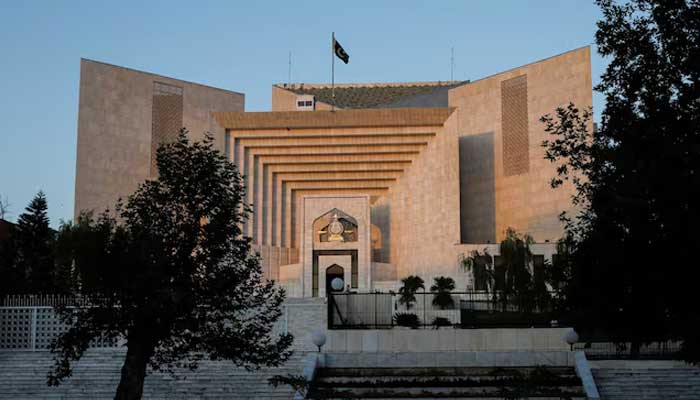
ISLAMABAD: Five judges of the Islamabad High Court (IHC) have approached the Supreme Court against an order that barred Justice Tariq Mahmood Jahangiri from performing his judicial duties. The judges—Justice Mohsin Akhtar Kiyani, Justice Babar Sattar, Justice Ejaz Ishaq Khan, Justice Saman Rifat Imtiaz, and Justice Jahangiri himself—submitted individual petitions under Article 184(3) of the Constitution. They argued the order was illegal, arbitrary, and violated earlier Supreme Court rulings on judicial independence. The judges entered the top court through the public entrance and submitted their petitions after biometric verification.
Justice Kiyani, in his petition, raised serious concerns about administrative interference in judicial powers. He said that administrative actions, like constituting benches or issuing rosters, were being misused to sideline judges. He claimed that available judges were removed from benches and denied even single bench duties without explanation. He also noted that reserved judgements could not be announced if the judge’s name was missing from the roster. According to him, this system of selective bench formation turns the judiciary into a regiment, violating its constitutional independence.
The petitioners requested the Supreme Court to declare that only the Supreme Judicial Council under Article 209 can restrain a judge from performing duties. They challenged recent notifications forming administrative committees and said all actions taken by these bodies were illegal and lacked authority. The judges also rejected the so-called “Master of the Roster” doctrine, saying it gave unchecked powers to the chief justice. They said bench formation and case distribution must follow rules approved by the entire high court, not just its chief.
Justice Kiyani further alleged that the suspension order against Justice Jahangiri was retaliation for rulings that upset powerful members of the executive. He said efforts were made to influence judicial outcomes in key cases. The petitions argued that judicial independence was under threat and that administrative powers were being used to manipulate the court’s functioning. Justice Jahangiri also filed his own petition challenging the order that stopped him from hearing cases.
Meanwhile, the IHC cause lists were cancelled due to the absence of five judges. Justice Saman Rifat’s court was shut, and the division bench of Justice Sattar and Justice Ejaz Ishaq Khan did not hear any cases. Two other judges, Justice Arbab Muhammad Tahir and Justice Khadim Hussain Soomro, were already on leave. As a result, many cases were postponed, adding to uncertainty within the court system. The legal and constitutional implications of these petitions now rest with the Supreme Court.

Indian firm accused of bypassing US sanctions via Iran trade

UK raises terror alert after Golders Green stabbing attack

Pakistan, China sign MoUs in machinery, livestock and medical tech

Rangers arrest alleged gang leader in Karachi crackdown

Pakistan Navy fully ready and capable during ‘Maarka-e-Haq’: vice admiral


12 countries condemn Israeli attack on Gaza aid flotilla




42 minutes ago

50 minutes ago
57 minutes ago
3 hours ago

3 hours ago

3 hours ago
- British authorities have charged a 45-year-old man with two counts of attempted murder following a stabbing attack in Golders Green,…
 Foreign ministers from twelve countries, including Pakistan, have strongly condemned Israel’s reported attack on the Global Sumud Flotilla, a humanitarian…
 The United States is reportedly considering a series of limited but powerful military strikes against Iran in an effort to…
- Iran’s Supreme Leader Mojtaba Khamenei said the Gulf future would be bright without US presence, stressing regional independence. He stated…

 The Healthcare Devices Association of Pakistan (HDAP) has raised serious concerns over the continued presence of banned reusable syringes in…
- Federal health authorities have ordered strict nationwide enforcement of a ban on conventional disposable syringes and initiated a policy review…
 Pakistan’s second national anti-polio campaign of 2026 is continuing across the country, with efforts now in its sixth day as…
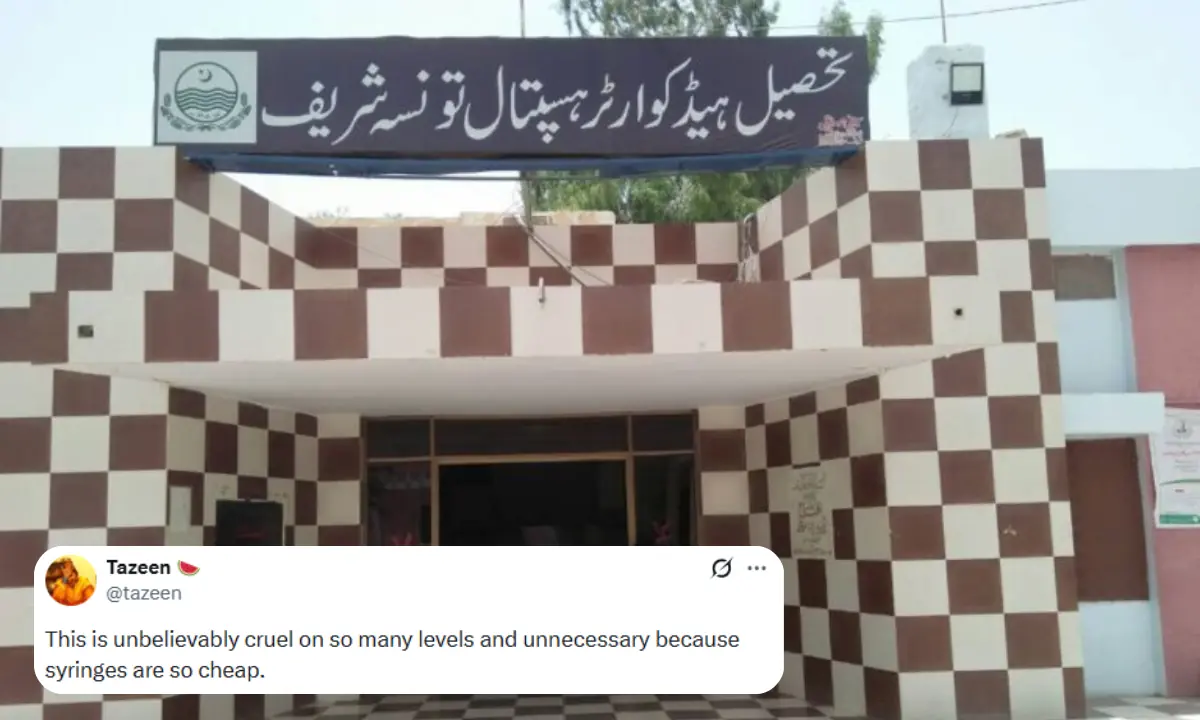
 A shocking report by BBC has triggered nationwide outrage in Pakistan after alleging severe medical malpractice at a Tehsil Headquarter…




- An Indian company has been accused of evading United States…42 minutes ago
- British authorities have charged a 45-year-old man with two counts…50 minutes ago
- Pakistan and China have signed multiple agreements aimed at expanding…57 minutes ago
- Sindh Rangers, acting on intelligence-based information, have arrested a suspected…3 hours ago